Simple Strategies for a Stress-Free Business That Can Feed Your Creativity
Guest Article by Aimee Lyons

For home decorators, gift shoppers, and event planners who sell custom pieces, the creative part often feels clear, and the business part feels like a constant knot. Creative entrepreneurs run into the same business challenges for creatives: pricing that sparks doubt, time management for artists that gets swallowed by revisions and messages, and admin that piles up until it drains the joy out of making. Without steady pricing strategies for creatives and a calm way to handle creative business management, it’s easy to stay busy while income stays unpredictable. The goal is simple: a smoother, more confident way to run the business side so the spark can stay.
This is a three-part article designed to walk you through the whole picture. First, we'll set up a simple, repeatable system for handling custom orders from pricing to delivery. Then we'll build a weekly rhythm that keeps your finances and marketing ticking along without taking over your studio time. Finally, we'll pull it all together with the tools and mindset shifts that let your business run calmly in the background while your creativity stays front and center. Stick with all three parts and you'll have a full foundation you can actually use.
Quick Summary: Run Your Creative Business Smoothly
Set clear pricing and simple packages so custom work stays profitable and stress free.
Use straightforward contracts to confirm scope, timelines, and expectations before you begin.
Send clean, consistent invoices so payments stay organized and predictable.
Build a basic workflow that keeps projects moving without draining your creative energy.
Market authentically so ideal customers find your unique decorative art with confidence.
Set Up a Simple System for Custom Orders
Here’s one way to walk through this.
This process helps you price, confirm, and deliver custom decorative art orders without scrambling. For home decorators and gift shoppers who want something personal, a smooth system means faster approvals, clearer expectations, and a better unboxing moment.
Step 1: Set a pricing floor you can repeat Start with materials, shipping or delivery supplies, and your time, then add a profit cushion so each custom piece supports your business. Choose 2 to 3 “size tiers” (small, medium, large) so shoppers can pick quickly and you are not reinventing your numbers for every request. Confirm what is included, like revisions, mockups, gift wrap, or hanging hardware.
Step 2: Write a one-page contract you can reuse. Keep it simple: what they are buying, the timeline, the number of revisions, how you handle deposits, and what happens if the buyer changes the scope. Add a clear note on usage rights (for example, the buyer gets the physical artwork, and you keep the right to show photos in your portfolio). Have every custom order “signed” via email reply or an e-sign tool before you start.
Step 3: Choose one invoice template and stick to it. Pick a template that always shows the item description, quantity, price, sales tax if applicable, deposit already paid, and the remaining balance with a due date. Use the same naming pattern every time (like DATE + CLIENT + PROJECT) so you can find invoices instantly. When you send the invoice right after the contract, you reduce back-and-forth and keep the project moving.
Step 4: Build a repeatable workflow from request to delivery Create a short checklist that moves from inquiry, quote, deposit, design proof, production, final payment, then packaging and delivery, so nothing falls through the cracks. Wrike describes a creative workflow as a way to move work from idea to final asset with fewer delays, which is exactly what custom décor orders need. Save your checklist as a template so every new commission starts the same way.
Step 5: Confirm milestones at three key points Send quick confirmations at deposit received, design proof approved, and ready to ship or ready for pickup. Each message should restate what is being made, the agreed timeline, and the next action the buyer needs to take. This keeps gift deadlines and room refresh timelines on track without stressful last-minute surprises.
Once your basics are in place, every new custom order feels calmer and more creative.
Plan → Track → Share → Reset Each Week
Once your commission workflow is steady, this weekly rhythm keeps the business side quiet and predictable so your creativity can stay front and center. It also creates a smoother experience for home decorators and gift shoppers because updates, timelines, and payment steps stay consistent from the first message to the final delivery.
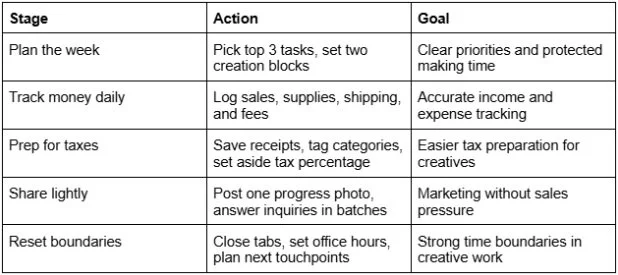
Planned time makes tracking easier, and tracking reduces stress when it is time to price, invoice, or file. Light sharing keeps your pipeline warm without hijacking your studio hours, and boundaries prevent every order from feeling urgent.
Start small and let the rhythm carry the load.
If you enjoyed part one of Aimee’s article, be sure to check back next week for part two - Quick Answers for a Calmer Creative Business.
About the Author
Aimee Lyons loves DIY and spends every bit of her free time on pet projects—crafting, refurbishing furniture, remodeling rooms, and turning her yard into a landscaping masterpiece. She created DIY Darlin to share her DIY knowledge while also serving as a forum to learn from other DIYers.
If you would like to write a guest article for Susan Newberry Designs, feel free to contact us. If you enjoyed this article and would like to read more like this, just sign up below so you won’t miss a thing. You’ll also receive a 10% off coupon to use here or in my Etsy store.
Thanks for stopping by,
Until next time…